Hello Kitty: Beauty Salon
- 4.4
- Rating
- 5.00M
- Installs
- Free
- Price
 Analysis by App-foxy
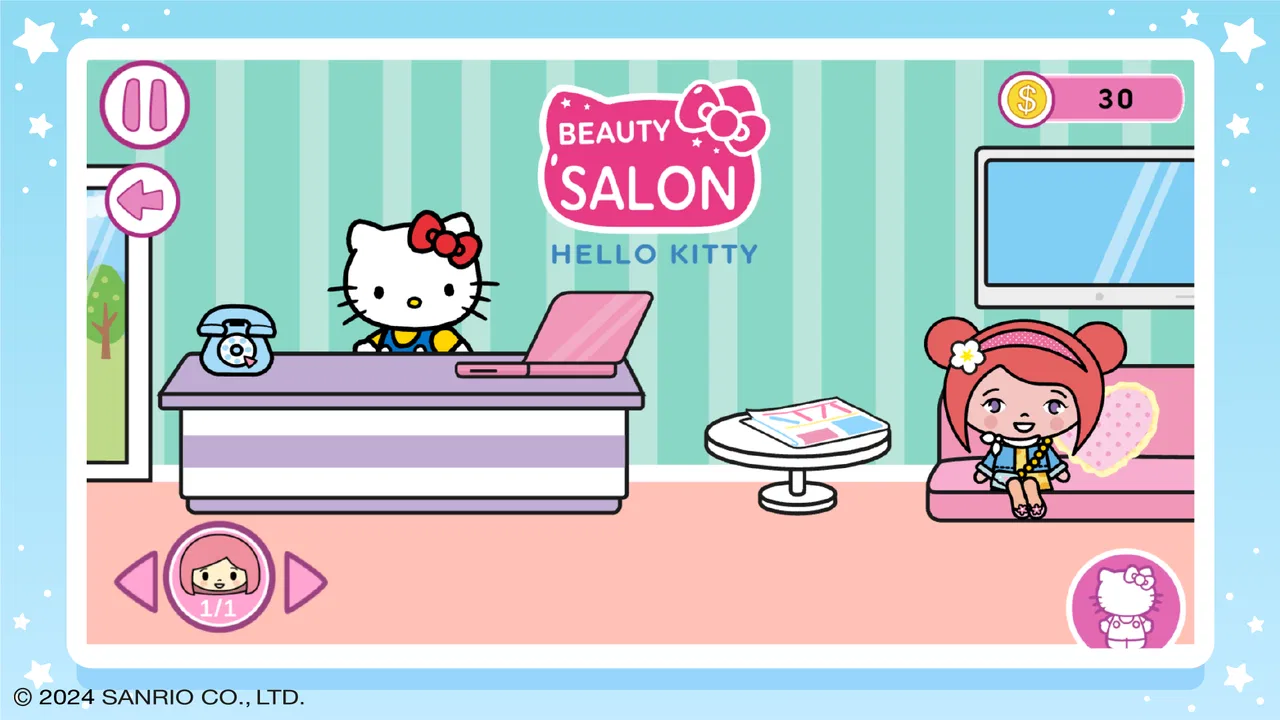
I found Hello Kitty: Beauty Salon most enjoyable when treated as a short, creative activity rather than a traditional game with a long-term challenge. It is an educational game from Hippo Kids Games that puts children in a playful beauty-salon setting, with activities built around makeup, hairstyles, and manicures. The appeal is immediate: choose a look, make changes, see the character react, and then start creating another style.
That simple loop is exactly why it works for younger players. There is no complicated story to follow before the fun begins, and the controls are designed around familiar beauty routines instead of difficult rules. At the same time, parents should understand what kind of experience this is. It is not a deep fashion simulator, a competitive game, or a lesson-based app with a formal curriculum. Its educational value comes through guided choices, visual experimentation, sequencing, and creative play.
I would recommend it most to children who enjoy Hello Kitty, pretend salon games, and activities where the result changes quickly after every tap. It is free to start, rated Everyone, and available for devices running Android 7.0 or later. The game has reached over a million installs and holds a 4.3 average from around 4.3 thousand ratings, which gives it a useful sense of popularity without changing the fact that its best audience is fairly specific: younger children who like gentle, appearance-focused play.
You May Also Like

 Blood Strike: 2.5 Anniversary
Blood Strike’s Loadouts Turn Every Drop Into a Tactical Gamble
A close look at Blood Strike’s custom loadouts: how fast access to signature weapons reshapes its battle royale rhythm, rewards preparation, and narrows the gap between fights.

 Pandora - Music & Podcasts
Pandora’s Music Is Easy to Start, but Harder to Recover
Pandora’s strength is its low-effort path from a seed to a station. Its weak spot is how much confidence it asks you to place in connection, setup, and quiet recovery.

 8 Ball Pool
 Is Built on Rivalries, Rematches, and Routine
A close look at the rivalries, rematches, shared routines, and unanswered safety questions that turn a quick pool match into a persistent mobile community.

 Samsung Music
’s Quiet Strength Is Playing What You Already Own
Its reach comes less from spectacle than from dependable access to a personal library. That simplicity is both the app’s strongest retention engine and its ceiling.

 AccuWeather: Weather Radar
AccuWeather Review: A Quick, Clear Forecast for Everyday Decisions
For everyday plans, the best forecast is the one you can understand quickly. AccuWeather makes rain timing, radar, and local conditions easy to act on, with a few trade-offs.

 Hill Climb Racing
Why Hill Climb Racing Still Turns Crashes Into One More Run
A tiny car, a bumpy hill and one more upgrade: Hill Climb Racing keeps resurfacing because its simple chaos makes every near-miss feel personal.
More From Our News Desk



How the beauty-salon loop feels in actual play
I find the beauty-salon loop easiest to enjoy when I treat each choice as a small creative experiment: decide what to change, watch the look respond, then choose whether to continue or start fresh. That makes the activity feel manageable even in a brief play session, while giving a child room to explain their decisions. Next, I’d look at how that simple rhythm works once the initial novelty wears off.
The first action is easy enough for a child to understand
The strongest part of the opening experience is how quickly the player can do something meaningful. Instead of asking a child to learn a large menu or remember a complicated objective, the game places the focus on a beauty task. A player can think, “I want to change this look,” and immediately begin experimenting with the available salon activities.
That first action matters more than it may seem. In many children’s games, the opening moments are slowed down by instructions, maps, currencies, or several layers of menus. Here, the beauty-salon theme gives the activity a clear purpose. Makeup, hair, and manicure work as separate ideas that children already recognize from pretend play, so the game does not need much explanation from an adult.
I especially like this format for a child who wants to play independently but still needs a readable structure. The theme tells the player what to do, while the visual presentation helps connect each choice to the character’s appearance. A parent may still need to explain a button the first time, but the overall concept is accessible enough for a young player to understand through trial and error.
The first session also reveals the game’s main limitation. Children who want action, movement, competition, or a story with surprises may find the salon routine too quiet. The game asks them to make appearance choices, not solve a demanding problem. That is a strength for calm creative play, but it means this is not a substitute for an arcade game, puzzle game, or adventure designed around challenge.
Feedback arrives through visible changes
The feedback rhythm is the real engine of the experience. A child selects an option, sees the character’s look change, and then decides whether to continue in that direction or try something else. That immediate response makes the game understandable without requiring reading ability or detailed explanations.
This is where the educational category makes sense in a practical way. The game encourages children to notice cause and effect: one choice changes the appearance, while another choice produces a different result. It also gives them a gentle introduction to sequencing. A child can work through a beauty routine step by step, rather than attempting to manage every decision at once.
For parents, one useful way to use the game is to turn the visual feedback into conversation. Ask the child what changed, which part they prefer, or what they would try next. That does not turn the app into a formal teaching tool, but it can support vocabulary, color discussion, planning, and explaining preferences. The best learning moments are likely to happen when the adult talks with the child instead of leaving the game to carry all the educational value by itself.
The feedback is also forgiving. A child can experiment without feeling that a wrong choice has ruined a level or wasted a difficult achievement. That is important for younger players, because the purpose is exploration rather than performance. I would still avoid presenting every beauty choice as a correct answer. The game works better when children understand that the result is a personal creation, not a test of what looks “right.”
Small rewards keep the next choice interesting
The reward in this game is primarily visual and creative. Completing one part of the salon routine gives the player a changed character to look at, and that result becomes a reason to continue with another part of the makeover. The satisfaction comes from seeing an idea take shape, not from defeating an opponent or collecting a complicated set of achievements.
That kind of reward is well matched to short play sessions. A child can finish a small makeover, show it to a parent, and feel that the activity had a clear ending. The result is also easy to understand: the player made something different from the starting appearance. For children who enjoy drawing, dressing up, or pretend play, this can feel more rewarding than a conventional score.
There is a useful creative trade-off here. Because the reward is tied to appearance, the game may encourage repeated visual comparison. Parents who prefer games focused on numbers, reading, logic, or physical activity may not see enough variety in this format. I would choose it for imaginative salon play, not as a general all-purpose educational app.
The in-app purchase structure is worth noticing before handing the device to a child. The game is free, while individual purchases range from $1.99 to $7.99. I would set expectations clearly before play and make sure the child knows which choices are available without buying anything. That simple conversation can prevent the common frustration of a child assuming every appealing option is automatically included.
The reset is part of the appeal
After a look has been completed, the natural question is what to do next. The game’s repeat value comes from resetting the creative situation and trying another combination. A child can approach the next session with a new idea: a different hairstyle, another manicure direction, or a completely different overall style.
This reset is not a punishment and does not erase a hard-earned competitive result. It is closer to putting away one pretend-salon appointment and opening another. That makes the game easy to revisit, especially when a child has only a few minutes available. A short waiting period, a quiet afternoon, or a shared play session with a parent can all suit this structure.
There is also a practical advantage for families with more than one child. Since the activity is based on creative choices rather than a single correct solution, children can take turns making their own style decisions. The adult can ask each child to describe the look they want before handing over the device, which helps make the session feel less like passive screen time.
However, the reset may feel thin to children who need persistent progress. If a player expects new stages, increasingly difficult tasks, or a strong sense of unlocking, the reason to begin again may weaken quickly. The game’s replayability depends on enjoying variation itself. It is a good fit for children who like repeating a familiar activity with a new idea, but not for players who need a growing challenge to stay engaged.
What makes this different from ordinary dress-up apps
Compared with a basic dress-up app, this game has a more focused identity. It is not simply about placing clothes on a character and stopping there. Its salon concept organizes the play around beauty routines, which gives children a clearer sequence of actions. The presence of makeup, hairstyles, and manicures makes the activity feel like a small role-play scenario rather than only a character-customization screen.
Compared with educational apps built around letters, counting, spelling, or structured puzzles, the learning is less explicit. I would not choose it when the main goal is practicing a school skill. Its educational contribution is softer: decision-making, visual observation, creative planning, and communication about choices. That can still be valuable, but parents should judge it as guided creative play rather than academic practice.
Compared with more elaborate salon simulators, the appeal here is likely to be simplicity. A younger child can understand the fantasy without managing a business, serving customers, or balancing resources. The trade-off is that older children may want more control and more complexity. If your child enjoys designing complete characters, the game may be a pleasant starting point; if they already want detailed fashion systems, it may feel limited.
The Hello Kitty theme is another important factor. Fans will probably connect with the familiar character immediately, while children who do not care about the character may focus only on the salon activities. I would not choose the game solely because of the name. The right question is whether the child enjoys the combination of a recognizable character and gentle beauty-focused creativity.
A realistic everyday session
Imagine a child waiting while a parent finishes a small household task. The child opens the game, chooses a salon activity, and begins changing the look. Instead of needing a long uninterrupted block of time, the player can make a few decisions, see the result, and either continue or stop after completing a small part of the routine.
That is where the game makes practical sense. It can fill a short break without demanding the emotional intensity of a competitive game. A parent can return to the child’s session and ask what was changed, why a certain style was chosen, and what the next look might be. The game becomes more useful when it is a starting point for interaction rather than a digital babysitter expected to provide endless variety.
For a longer family session, I would suggest giving the child a creative prompt. Ask for a bright look, a calm look, or a style inspired by a favorite color. The prompt adds a planning challenge that the game itself does not need to force. It also helps prevent random tapping, because the child begins with an idea and then uses the salon tools to express it.
Another practical tip is to let the child finish one complete creative attempt before switching activities. That gives the action-feedback-reward cycle a satisfying shape. If the child repeatedly jumps between options without completing anything, the game can feel like a menu of buttons rather than a salon experience.
Where parents may notice friction
The biggest concern is not difficulty; it is supervision around purchases. Since the game is free but includes paid items, adults should handle device purchasing settings and explain the boundary between included content and optional extras. This is especially important for younger children who may interpret a visible option as an invitation to tap.
Another limitation is the narrow theme. Makeup, hair, and manicures will not appeal equally to every child, and some families may prefer creative games that offer building, animals, music, drawing, or problem-solving. The game should be presented as one type of play, not as a universal educational choice.
I also would not rely on it for sustained independent entertainment over a long period. The loop is pleasant because it is quick and forgiving, but those same qualities can reduce depth. Children who need a story, progression, or increasingly difficult goals may finish the available creative possibilities sooner than expected.
Finally, the beauty focus deserves a little context. Parents can make the experience healthier by emphasizing creativity and personal choice rather than suggesting that one appearance is better than another. Ask what the child likes about a look, not whether the character looks “perfect.” That small change in conversation keeps the game centered on imagination instead of appearance-based judgment.
Device fit, age, and practical expectations
The Everyone content rating makes the game suitable for a broad family audience, although suitability still depends on how each household handles screen time and purchases. The minimum Android requirement is version 7.0, so families with older devices should check compatibility before planning around it. The current version is 1.4.2, which is the version I would look for when checking that the installation is up to date.
As a free game, it is easy to try without committing money at the beginning. That lowers the barrier for families who want to see whether a child connects with the Hello Kitty salon idea. The important expectation is that free access and optional purchases are separate decisions. I would let the child explore the included experience first, then decide whether any paid additions are worthwhile for that particular player.
The game was released on December 31, 2024, and its popularity suggests that it has found an audience among families looking for character-based children’s play. Still, popularity should not be confused with a guarantee that every child will enjoy it. A child who loves beauty makeovers may return often, while another may lose interest after discovering that the central activity is visual customization rather than a broader adventure.
My verdict on the complete action-feedback-reward-reset loop
In my experience, the loop is clear and well matched to younger players: choose a beauty action, watch the appearance change, enjoy the finished result, and begin again with a new idea. The game does not need complicated systems to make that cycle understandable. Its strength is the immediate relationship between a child’s choice and what appears on screen.
I would recommend it to families seeking a gentle, character-led activity for short creative sessions. It is particularly suitable for children who enjoy pretend salon play and like experimenting without losing progress or facing failure. The educational value is real but informal, appearing through choices, sequencing, visual feedback, and conversation rather than through lessons or quizzes.
I would skip it if your child wants action, deep progression, academic practice, or a wide range of themes. I would also compare it with a drawing app or a broader dress-up game if the child prefers open-ended art and more control over the final creation. Those alternatives may offer more freedom, while this game offers a more recognizable routine and a focused Hello Kitty setting.
Overall, Hello Kitty: Beauty Salon succeeds because it understands its own scale. It offers a small, repeatable creative ritual rather than pretending to be a complete adventure. With sensible purchase boundaries and a parent who frames the activity around imagination instead of appearance standards, it can be a charming addition to a child’s collection. The reason to start another session is simple: there is always another look to try, and the next result belongs to the child’s idea.
FAQs for Hello Kitty: Beauty Salon
01What is the main objective of Hello Kitty: Beauty Salon?
In Hello Kitty: Beauty Salon, the primary objective is to manage and operate a beauty salon with Hello Kitty and her friends. Players are tasked with providing various beauty treatments, styling hair, and ensuring customer satisfaction. As you progress, you can upgrade your salon and unlock new features to enhance customer experiences.
02Is Hello Kitty: Beauty Salon suitable for children?
Yes, Hello Kitty: Beauty Salon is designed to be child-friendly, offering engaging and educational gameplay for young players. The app features colorful graphics and easy-to-understand mechanics, making it accessible for kids while also promoting creativity and time management skills through interactive play.
03Does the game offer in-app purchases?
Hello Kitty: Beauty Salon does include in-app purchases. Players can buy additional items, salon upgrades, and special features to enhance gameplay. While not necessary to enjoy the game, these purchases can provide a more enriched experience. Parents may want to monitor these transactions if children are playing.
04Can you play Hello Kitty: Beauty Salon offline?
Yes, Hello Kitty: Beauty Salon can be played offline. However, some features, such as updates or purchasing new items, require an internet connection. Playing offline allows you to continue managing your salon, but connecting online may enhance your gameplay with additional content and updates.
05What devices are compatible with Hello Kitty: Beauty Salon?
Hello Kitty: Beauty Salon is available for both Android and iOS devices. To ensure optimal performance, it's recommended to have a device running on a relatively recent operating system version. Checking the app's requirements on the respective app store can help determine compatibility with your specific device.
Pros
- Adorable Hello Kitty-themed visuals.
- Intuitive controls for all ages.
- Variety of salon tools and styles.
- Frequent updates with new content.
- Encourages creativity and design skills.
Cons
- In-app purchases can be pricey.
- Limited free content available.
- Requires internet for some features.
- Advertisements can be intrusive.
- May become repetitive over time.

Hello Kitty: Beauty Salon
Gallery